

Retinal Tear Symptoms: Warning Signs You Should Not Ignore
Have you suddenly noticed a new shadow, flashes of light or black spots in your vision?
It is easy to blame these changes on ageing or tired eyes. Although, unexplained changes, sudden floaters, or flashes can be symptoms of retinal tear.
A retinal tear takes place when the light-sensitive, thin tissue at the back of the eye develops a break. If fluid passes with this opening, the retina may begin separating from the eye wall, forming retinal detachment. In which delayed treatment can lead to permanent vision loss, so understanding warning signs matters.
Understanding a Retinal Tear
The retina is a light sensitive tissue at the back of the eye that sends signals to the brain.
The eye includes a jelly-like clear structure known as vitreous. With age, it becomes more liquid and may pull away from the retina, a process named as posterior vitreous detachment, or PVD.
For most of the people, PVD causes no serious issue. At times, however, the vitreous remains attached to a small area of the retina. As it pulls away, it can tug hard enough to form a tear.
Once a retinal tear develops, fluid may pass with the opening and move below the retina, rising the risk of retinal detachment.
DID YOU KNOW ?
A retinal tear majorly does not cause pain. The eye may look completely normal from the outside even when a crucial change is taking place inside.
What Are the Main Retinal Tear Symptoms ?
Retinal tear symptoms frequently appear suddenly. Some people notice one change, whereas others face various warning signs together.
1. Sudden Increase in Floaters
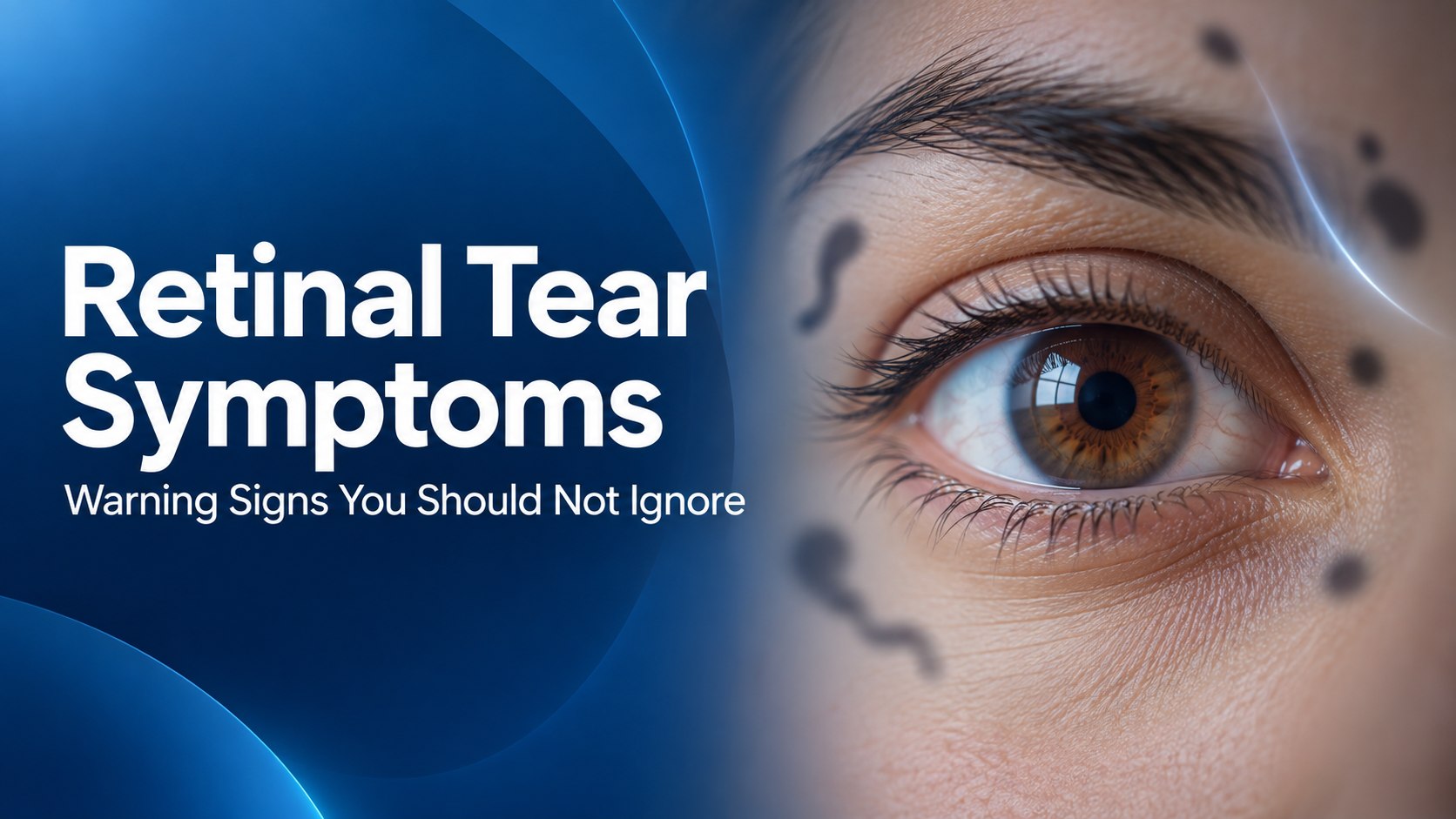
Floaters are small shapes that drift across your field of vision. They may appear like rings, specks, cobwebs, black dots or strands.
A few floaters are common, mainly with age. The issues start when you immediately acknowledge many more floaters than usual.
Some people explain a shower of pepper-like particles or black spots. This can take place when the vitreous pulls on the retina or a tear causes bleeding.
2. Sudden Blurring of Vision
A retinal tearing may sometimes be accompanied by sudden blurred vision or haziness.
You may feel that one eye is less clear, that objects look cloudy, or that focusing has become problematic.
Sudden blurring must not automatically be blamed on screen time or tiredness, mainly if it appears with floaters or flashes.
DID YOU KNOW ?
Retinal flashes are not external lights. Mechanical pulling on the retina can make the brain notice a flash even in darkness.
3. Flashes of Light
Another crucial warning sign is the appearance of new flashes.
They may resemble sparks, camera flashes, lightning streaks at the side of vision, mainly at night.
The flashes may come about when the vitreous pulls on the retina and stimulates its light-sensitive cells.
Also, not every flash depicts you have a retinal tear. So, new flashes, precisely when they arise with sudden floaters, must be examined on time.
4. A Curtain-Like Effect
One of the major symptoms of retinal detachment is the feeling that a grey, dark or black curtain is moving across your vision.
The shadow may start at the top, side or bottom and gradually speed. A curtain-like hindrance is an emergency. Do not wait further to get it clear.
5. Loss of Peripheral Vision
Peripheral Vision is your capability to see the objects to the side while looking straight away. If a part of the retina starts to detach, your side vision may suddenly decrease.
As this may take place without pain, it can be easy to underestimate its seriousness.
6. A Dark Shadow in Your Vision
A dark shadow showing a part of your visual field is more concerning. It may signify that fluid has started moving below the retina and that retinal detachment is developing.
Floaters Are Common, So When Should You Worry ?
Occasional floaters are common and may remain unchanged for years without retinal disease.
The crucial difference is sudden change.
Stable floaters that have remained unchanged for years or months are different from suddenly noticing new dots, cobwebs, or threads.
It is required to be more concerned if new floaters occur with a shadow, flashes, loss of side vision , blurred vision, or a curtain-like effect.
Retinal Detachment vs Retinal Tear
Both the terms are related but not the same condition.
Retinal tear is an opening in the retina. Detachment takes place when fluid passes through it and separates the retina from the eye wall.
Not every retinal tear becomes a retinal detachment. Even so , some tears carry major risks and require immediate aid.
The earlier a dangerous tear is examined, the better the chance to deal with it before detachment begins.
Who Is More Likely to Develop a Retinal Tear ?
Anybody can develop a retinal tear, but some factors elevate the chances of risk
Growing Age
Age-related vitreous changes make posterior vitreous detachment more common.
High Myopia
Individuals with significant nearsightedness may have increased retinal risk and thinner retinal tissue.
Family History
A family history of retinal detachment or retinal tear may elevate the level of risk.
Eye Injury
A strong blow to the eye can form damage or traction that leads to a retinal tear.
Previous eye surgery
Previous eye surgery, containing cataract surgery, may upsurge lifetime retinal risk.
Why You Should Not Wait for Pain
One risky assumption is, “If it were serious, it would hurt.”
Retinal tears majorly cause no redness, obvious external change or pain.While the issue rises, you may continue your normal routine.
Due to which sudden visual symptoms are more crucial than pain when deciding whether to seek care.
RED FLAGS: When Should You Seek Urgent Eye Care ?
Seek urgent examination for new flashes, curtain-like obstruction, many black spots, a dark shadow, a curtain-like obstruction, peripheral vision loss, or sudden floaters,
If a shadow, curtain, sudden loss of vision develops,, seek ophthalmic care immediately rather than waiting for a routine appointment.
How Is a Retinal Tear Diagnosed ?
A retinal tear is not diagnosed at home
Even if your central vision seems normal, a small tear may be present in the peripheral retina.
An ophthalmologist mainly performs a dilated retinal assessment. Eye drops enlarge the pupil so the doctor can assess the retina carefully.
Special lenses inspect the peripheral retina area in which tears take place. If bleeding blocks the view, an eye ultrasound may be required.
Can a Retinal Tear be Treated ?
Yes. It can frequently be managed easily, when a retinal tear requiring treatment is detected before attachment occurs.
Cryotherapy
Cryotherapy makes use of controlled freezing around the retinal tear in order to form the same protective adhesion.
Laser Retinopexy
Laser treatment places small burns around the tear. These develop controlled scars that support the retina adhere to the underlying tissue and decrease the chance of fluid passing below.
Further, not every retinal tear necessitates treatment. While some low risk tears may only require monitoring. The decision relies on the type of tear, location, symptoms, and various retinal outcomes.
Can Retinal Tears Be Prevented?
Not every retinal tear can be prevented, precisely when it takes place due to natural age-related changes.
Decrease avoidable risks through safeguarding your eyes from injury, following post-surgery advice, attending eye examinations for high myopia as well as reporting a family history of retinal detachment.
Majorly, do not ignore floaters, new flashes, or sudden vision changes.
When Your Vision Sends a Warning, Listen
Understanding retinal tear symptoms supports you to respond quickly before a potentially serious problem progresses. A few new dots may seem harmless. A brief flash at the corner of your eye may last only seconds, but sometimes these small changes are the first warning of the retina that something is wrong.
At Drashti Netralaya, Dahod, they offer assessment and treatment for retinal and vitreous conditions, containing retinal detachments and retinal tears.
If you experience flashes, sudden floaters, a dark shadow, a curtain-like obstruction, or unexplained reduction in vision, do not wait for symptoms to disappear.
Get your retina assessed on time. Early interventions can help to protect your vision permanently.
Frequently Asked Questions
1. Is a retinal tear painful ?
Majorly not. Retinal detachment and retinal tears can take place without pain, due to which immediate visual changes must be taken seriously.
2. What are the main symptoms of a retinal tear?
The most common symptoms are flashes of light and sudden new floaters. Some individuals also face blurred visions, whereas other people may have no obvious symptoms.
3. Do floaters and flashes always mean a retinal tear?
No. Most flashes and floaters are linked to natural vitreous changes. Even though, sudden new symptoms or a marked increase must be assessed promptly.
4. Is a retinal tear an emergency ?
A suspected retinal tear needs immediate ophthalmic examination. A shadow, sudden loss of side vision, dark curtain or sudden vision loss needs immediate attention.
5. Can a retinal tear heal on its own ?
Some low-risk retinal tears may remain stable and require only monitoring. Whereas others need cryotherapy or laser treatment to reduce the risk of retinal detachment.