


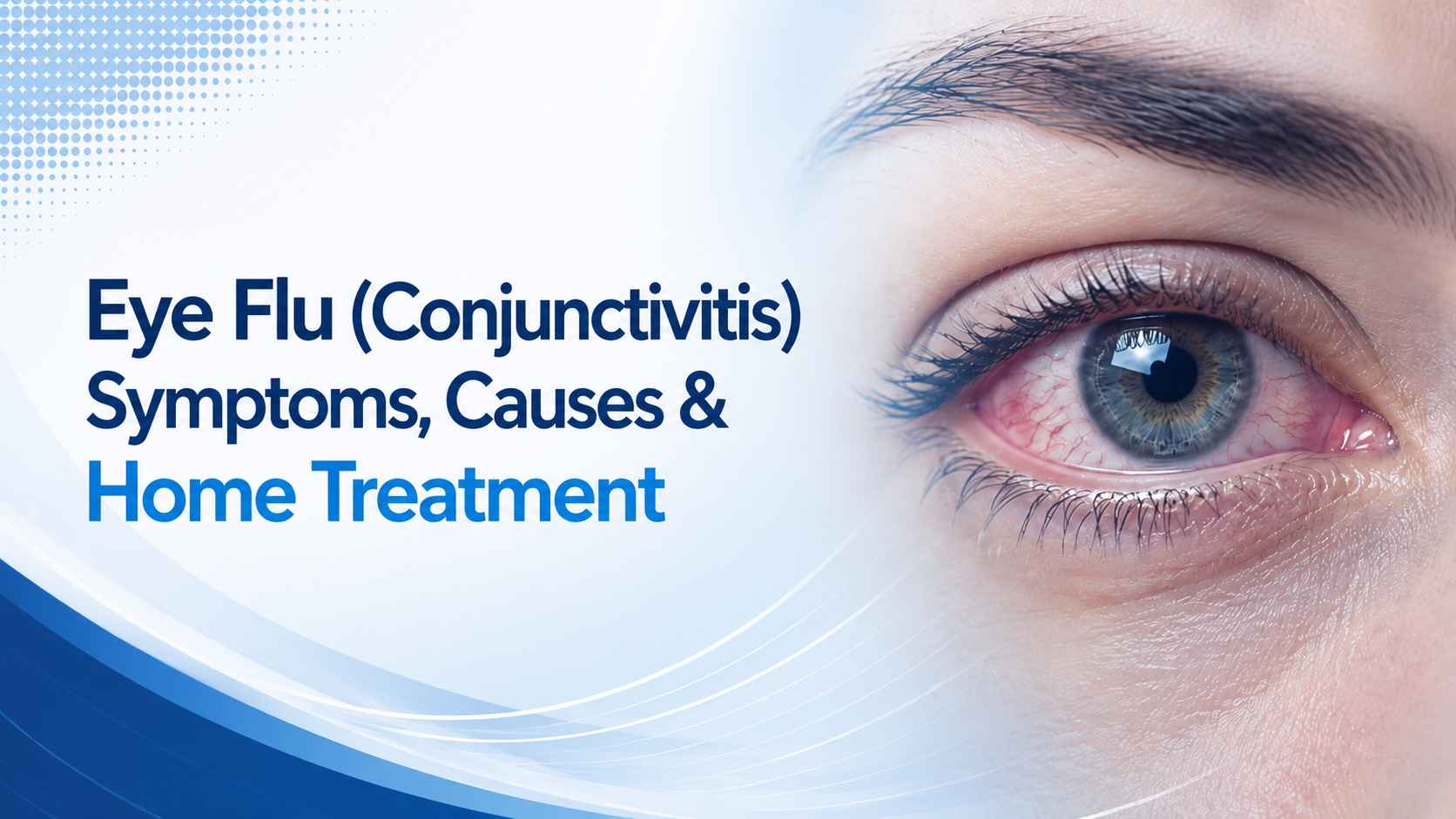
Eye Flu (Conjunctivitis): Eye Flu Symptoms, Causes & Treatment
Red, itchy, watery eyes can suddenly emerge and interfere with your life. From not being able to keep your eyes open at work to not wanting to infect your family, it’s important to know the eye-flu symptoms so you can recover as soon as possible.
Conjunctivitis, also referred to as pink eye, is one of the most frequent eye infections among all age groups. Most of the time, eye flu symptoms are mild and can be treated, but if they are ignored, it can cause discomfort for an extended period of time and, in some cases, complications.
In this guide, we at Drashti Netralaya explain everything you need to know about conjunctivitis symptoms, causes of eye flu, treatment for eye flu, prevention tips, and the most effective eye flu home remedies to ease the discomfort in the eye.
What is Eye Flu (Conjunctivitis)?
Eye flu, or conjunctivitis, is an inflammation of the conjunctiva, the thin, transparent membrane that covers the white part of the eye and the inner surface of the eyelids. This membrane gets inflamed and causes the small blood vessels in the eye to widen, giving the eye a red or pink hue.
Eye flu may seem like a frightening disease, but it is generally temporary and can be effectively treated if it is timely taken care of. If eye flu symptoms are diagnosed in their early stages, it may be possible to avoid further eye infection or the spread of infection to other people.
Types of Conjunctivitis
Not all conjunctivitis is caused by the same factors. The type is determined by the diagnosis, which in turn dictates treatment.
- Viral Conjunctivitis
This is the most familiar variety of conjunctivitis and is typically induced by adenoviruses. It often occurs in conjunction with a cold, sore throat, or viral fever.
Characteristics include:
- Highly contagious
- Excessive watery discharge
- Redness of the eye, which may be bilateral
- Slight irritation and burning sensation
Eye flu is contagious, so it’s crucial to recognize the signs and symptoms of the flu to help prevent the virus from spreading to others.
- Bacterial Conjunctivitis
The cause of bacterial conjunctivitis is bacteria like staphylococci or streptococci.
Characteristics include:
- A heavy discharge of thick yellow or green material
- Stickiness of eyelids after sleep, particularly
- Eye redness
- Puffiness of the eyelids.
Unlike a viral infection, bacterial conjunctivitis may need antibiotic eye drops that must be prescribed by an eye doctor.
- Allergic Conjunctivitis
This type is caused by the reaction of the eyes to allergens like pollen, dust mites, pet dander, mold
Allergies typically impact both eyes at the same time and cause severe itching.
- Irritant Conjunctivitis
Irritant conjunctivitis happens when a person is exposed to such things as the following:
Smoke, water from a swimming pool treated with chlorine, cosmetics, chemical fumes, and dust particles. Symptoms usually improve when the irritant is removed.
What are the Eye Flu Symptoms?
If you are aware of the eye-flu symptoms, you will be able to get prompt treatment and avoid spreading the eye flu.
Common symptoms include:
- Red or pink eyes
- Watery eyes
- Excessive tearing
- Itchy eyes
- Burning sensation
- Swollen eyelids
- Sticky discharge
- Yellow or green pus (in bacterial infection)
- Sensitivity to light
- Foreign body sensation
- Having crusts around the eyes upon waking up
Seek immediate ophthalmologic care if these eye symptoms of the flu last for more than a few days or fail to get better with home treatment.
What are the causes of Eye Flu?
There are several causes of conjunctivitis. Commonly, conjunctivitis happens due to:
- Viral infections
- Bacterial infections
- Seasonal allergies
- Dust exposure
- Smoke
- Pollution
- Contact lens misuse
- Poor eye hygiene
- Contaminated towels
- Sharing eye makeup
- Swimming in polluted pools
Knowing the causes may help to minimize the likelihood of future eye flu symptoms.
Is Eye Flu Contagious?
The most frequently asked question by people is how long the eye flu is contagious. That’s for each person to decide.
Viral conjunctivitis is highly contagious and can be contagious for 7-14 days or longer. In most cases, bacterial conjunctivitis is contagious for 24-48 hours after you begin treatment with antibiotics. Conjunctivitis caused by allergens is not contagious. People who have symptoms of eye flu should not be around others until told to do so by a doctor.
Eye Flu Home Remedies
While medical treatment may be necessary for eye bacterial infections, several home remedies can help relieve symptoms.
Cold Compress
Place a clean, cold cloth over closed eyelids for 10–15 minutes to reduce swelling and irritation.
Artificial Tears
Lubricating eye drops help soothe dryness and reduce irritation.
Maintain Proper Hygiene
Wash your hands frequently and avoid touching your eyes.
Clean Eye Discharge
Use sterile cotton soaked in clean water to gently remove crusting.
These home remedies for eye flu can relieve symptoms but cannot be a substitute for treatment. If symptoms worsen, see a doctor.
In case you are suffering from eye flu symptoms, steer clear of:
- Rubbing your eyes
- Using shared towels or pillows
- Wearing eye makeup
- The use of old eye drops
- Wearing contact lenses
- Using steroid eye drops as self-medication
- Using public swimming facilities.
These habits can aggravate the infection or transmit it to others.
When Should You Visit an Eye Doctor?
Seek immediate medical attention if you experience:
- Severe eye pain
- Sudden vision loss
- Extreme sensitivity to light
- Persistent redness lasting over a week
- Thick discharge despite treatment
- Swelling around the eye
- Fever with worsening eye symptoms
- Eye injury along with redness
Persistent eye flu symptoms should always be evaluated by an ophthalmologist.
Eye Flu (medical treatment)
Treatment is based on the underlying cause.
Viral Conjunctivitis
There is no cure. Treatment is aimed at easing symptoms with drops for the eyes and nose, cold compresses, and resting.
Bacterial Conjunctivitis
Doctors usually prescribe antibiotic eye drops or ointments.
Allergic Conjunctivitis
Treatment involves antihistamine eye drops, avoidance of allergens, and cold compresses. Don’t use antibiotics without medical advice, they don’t work for viruses.
Eye Flu vs Allergy Symptoms
Many people confuse infections with allergies.
Here’s how to identify the difference.
| Eye Flu | Allergy |
| Usually starts in one eye | Usually affects both eyes |
| May produce watery or sticky discharge | Mostly watery eyes |
| Mild itching | Severe itching |
| Can spread to others | Not contagious |
| Often linked with viral fever | Often accompanied by sneezing |
How to Prevent Eye Flu?
Simple hygiene practices significantly reduce the risk.
Follow these preventive tips:
- Wash hands regularly
- Avoid touching your eyes.
- Never share towels.
- Clean spectacles frequently
- Replace old eye makeup
- Disinfect frequently touched surfaces
- Avoid close contact with infected individuals.
- Wear protective eyewear in dusty environments.
These preventive habits reduce your chances of developing eye-flu symptoms and help stop outbreaks within families and workplaces.
Why Choose Drashti Netralaya?
At Drashti Netralaya, our experienced ophthalmologists provide extensive diagnosis and treatments for all types of conjunctivitis and eye infections.
We offer:
- Advanced eye examination
- Accurate diagnosis
- Personalized treatment plans
- Modern diagnostic technology
- Compassionate patient care
- Advise preventive eye health measures
Early or appropriate consultation can help you avoid complications and help with recovery, whether symptoms are mild or severe.
Eye flu is easily spread but not an issue to ignore. With good hygiene practices, proper recognition of eye-flu symptoms, and timely medical attention, eye flu can be resolved quickly while preventing its spread.
There are a number of home remedies for eye flu that can help ease symptoms, but if the eye remains red, painful, and/or the discharge is excessive, it should always be assessed by a professional. Don’t mistake eye flu symptoms for allergy symptoms; visit an eye specialist to get an accurate diagnosis.
We are dedicated to safeguarding your vision at Drashti Netralaya with our professional eye care, innovative treatments, and caring service for each patient.
FAQs
- What are the initial eye-flu symptoms?
Initial symptoms of conjunctivitis include redness, watery eyes, slight itching and burning, profuse tearing, and irritation. Some may also experience eyelid swelling.
- For how many days is the eye flu contagious?
Viral and bacterial conjunctivitis is contagious for 7-14 days and 24-48 hours after beginning antibiotic treatment, respectively. Allergic conjunctivitis is not contagious.
- Is there a home remedy for eye flu?
Yes, mild cases can usually be dealt with using home remedies for eye flu, including eye drops to lubricate the eye, good hand hygiene, not wearing contact lenses, and using cold compresses. If severe pain, vision changes, or long-standing symptoms occur, however, it’s important to seek urgent advice from your eye specialist.