01
Community Camp Setup
The team reaches an identified community location where patients can attend closer to home.


Regular diagnostic camps are held across six districts and integrated with hospital referral networks, helping patients move smoothly from community-level screening to specialist evaluation and treatment.
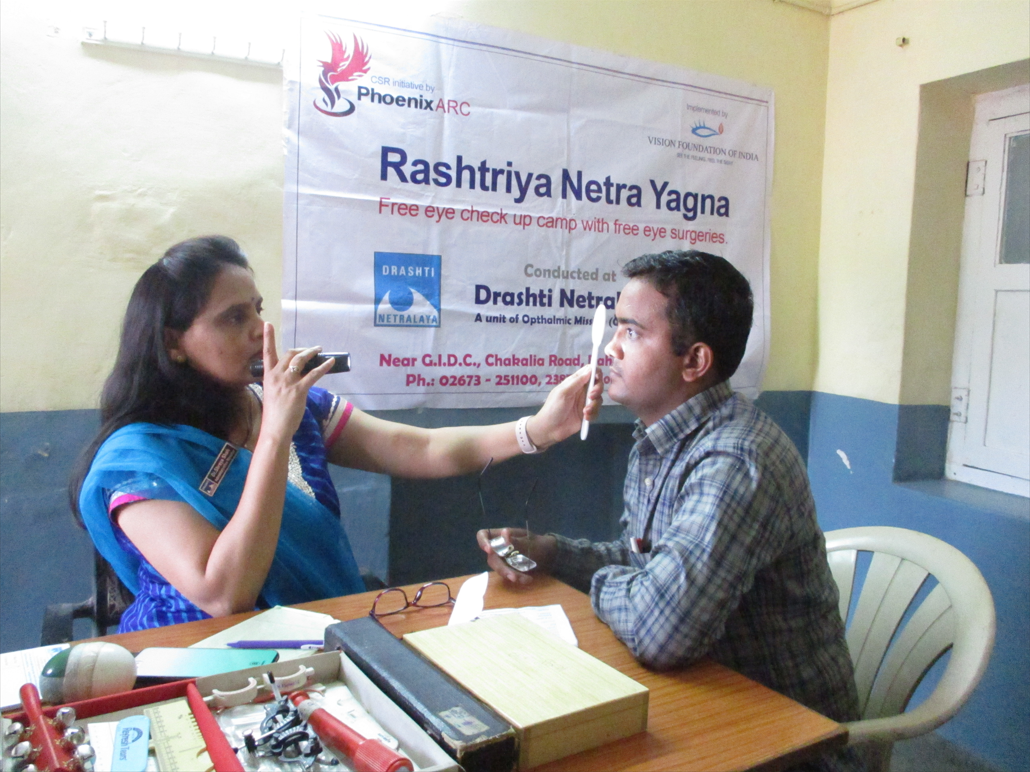
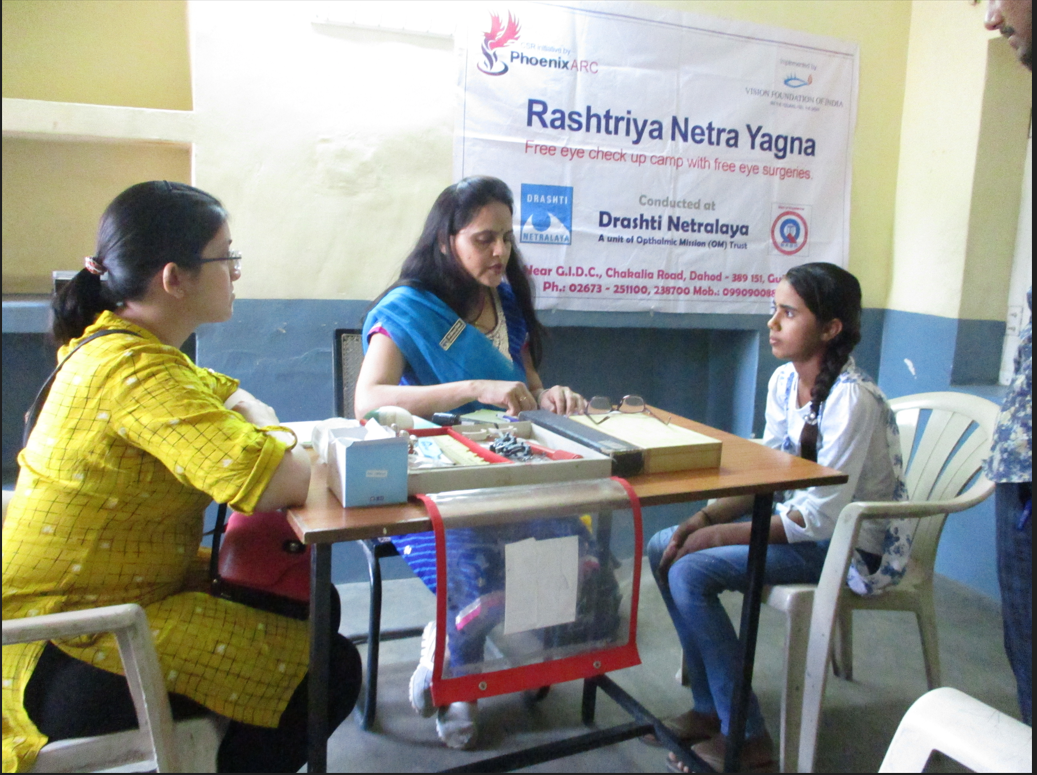
Mobile diagnostic camps reduce the first barrier to eye care by taking assessment closer to rural and underserved communities. Patients are examined locally, counselled and connected with Drashti Netralaya whenever detailed evaluation, spectacles, treatment or surgery is required.
Each camp is designed to make diagnosis useful. The programme does not stop after identifying an eye problem; it guides the patient towards the appropriate level of care.
The team reaches an identified community location where patients can attend closer to home.
Vision and eye health are assessed using suitable diagnostic tools and clinical examination.
Findings are explained and the required next step is documented clearly for the patient.
Patients requiring specialist evaluation or surgery are connected with the appropriate hospital service.
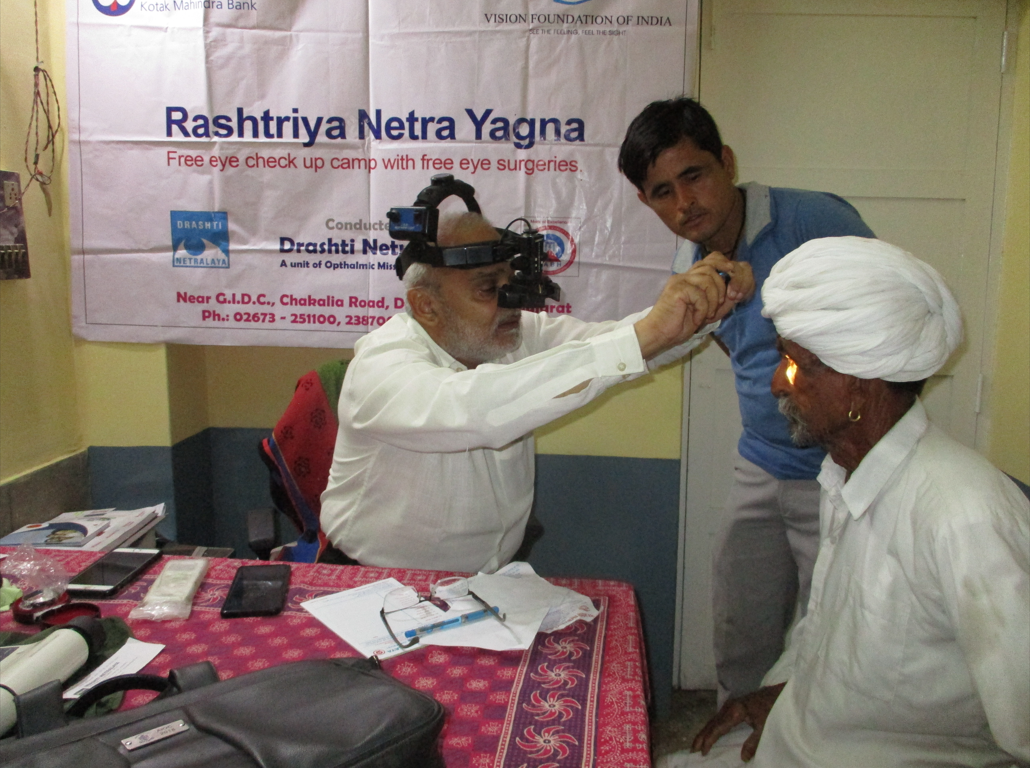
The camps identify eye conditions, provide appropriate guidance and connect patients with specialised care whenever required.
Basic assessment to identify reduced, blurred or impaired eyesight.
Identification of patients who may benefit from corrective spectacles.
Detection and referral of patients requiring detailed cataract evaluation or surgery.
Eye-health assessments for patients across different age groups and communities.
Suitable guidance and referral for people with remaining functional vision.
A connected route to specialist examination, treatment and surgical care.
The Bikaner outreach record highlights communities where long travel distances, severe poverty and multiple affected family members made active identification, counselling and hospital referral essential.
Bangarsar is recorded as one of the remotest villages in the Thar Desert, approximately 120 kilometres from the district headquarters. Three children and one parent were operated at OM Trust Dahod. The youngest family member, aged six months, was awaiting surgery at the time of documentation.
The record describes a family of ten living in severe poverty. Nine members were affected by curative blindness. Seven children and two adults from the same family were waiting for sight-restoring care.
These four photographs are embedded directly as separate original JPEG images. They do not depend on Media Library URLs, a PDF viewer, a sprite or an external image host.


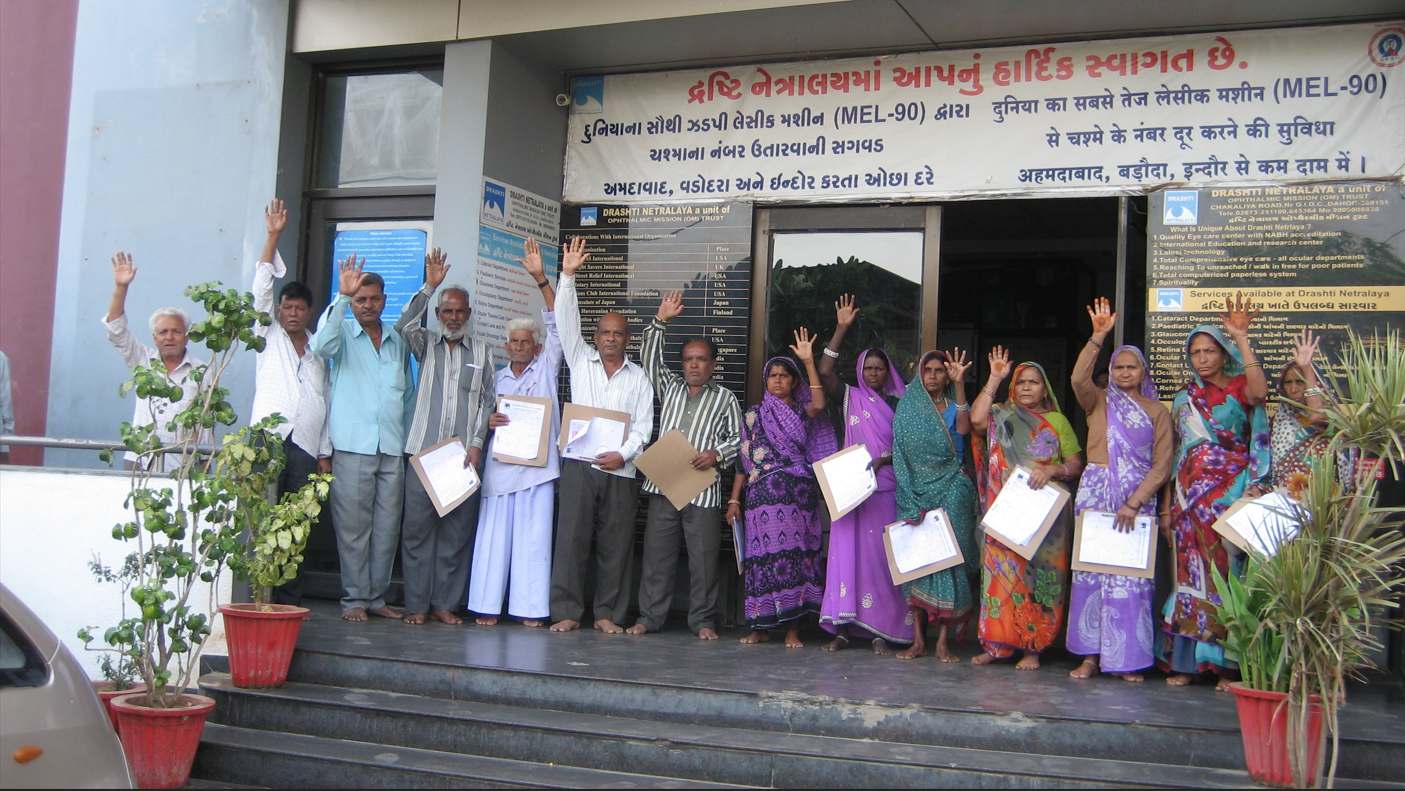
By bringing diagnosis closer to communities and connecting patients with hospital services, Mobile Diagnostic Camps create a clear pathway towards treatment, independence and hope.