

Glaucoma Treatment Options: Eye Drops, Laser & Surgery Explained
People diagnosed with glaucoma often have the same issue: Which glaucoma treatment is right for me : laser, eye drops or surgery? As glaucoma can progress without obvious early symptoms, understanding the existing treatment options is a crucial part of protecting vision.
Glaucoma treatment mainly targets lowering eye pressure and preventing additional damage to the optic nerve. Depending on the severity and type of glaucoma, treatment may contain laser procedures, prescription eye drops and surgery.
Suitable treatment is different for every patient. Your ophthalmologist may consider your optic nerve condition, previous treatments, eye pressure, age, general health, visual field results and the type of glaucoma before suggesting a treatment plan.
What Is the Main Goal of Glaucoma Treatment?
The main goal of Glaucoma treatment is to protect the optic nerve from further damage. In most individuals with glaucoma, damage is linked with increased pressure inside the eye termed as intraocular pressure or IOP. Eye pressure depends partly on the balance among the production and drainage of a clear fluid known as aqueous humor.
Glaucoma mainly works better with either-
- reducing the amount of fluid produced inside the eye, or
- helping fluid drain more efficiently.
Your ophthalmologist may set a target eye pressure, which is the pressure level considered safer for your optic nerve.
This target may change over time depending on how the disease progresses.
1. Glaucoma Treatment with Eye Drops
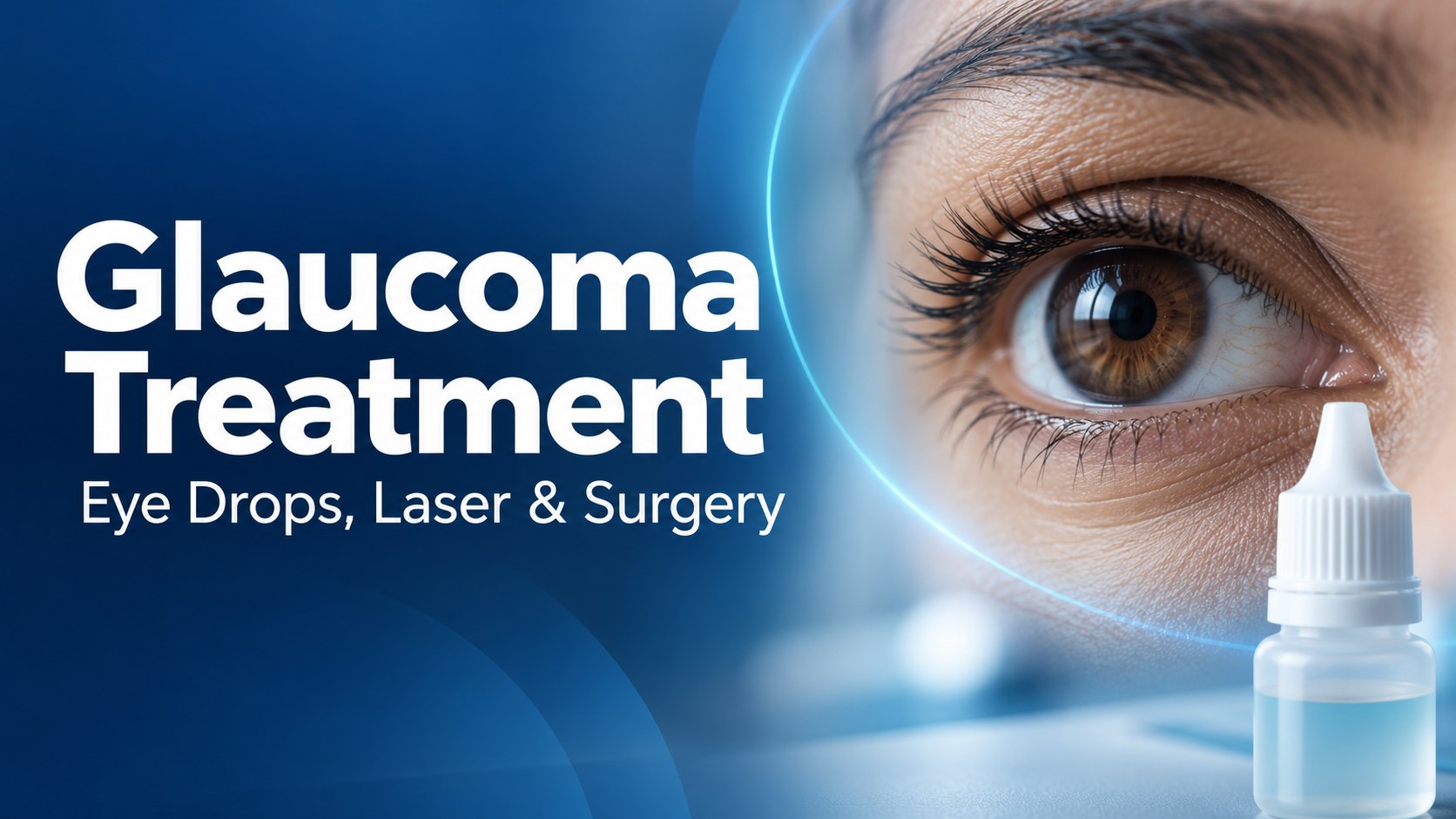
Prescription eye drops are known as the most common treatments for glaucoma.
Eye drops are frequently used as the initial treatment, mainly for open-angle glaucoma and ocular hypertension.
Various types of glaucoma eye drops work in various ways.
Beta Blockers
Beta-blockers eye drops decrease the amount of fluid produced inside the eye.
They may be used collectively or alone with another glaucoma medication.
As some of the medicine can enter the bloodstream, beta blockers may not be suitable for everyone, mainly people with breathing problems or certain heart conditions.
Alpha-Adrenergic Agonists
These medications can lessen the fluid production and may also enhance fluid drainage.
Some patients may experience-
- eye redness
- fatigue
- dry mouth
- irritation or allergy
Prostaglandin Analogues
These medications mainly aid fluid leave the eye more successfully.
They are mainly prescribed as they can lessen eye pressure efficiently and are frequently used once a day.
Possible side effects may contain:
- mild irritation
- changes in the skin around eyes
- eye redness
- darkening of iris
- increased eyelash growth
Not everyone experiences these side effects.
Carbon Anhydrase Inhibitors
These medications decrease the fluid production inside the eye.
They may be prescribed as eye drops and sometimes in the form of tablets.
Eye-drop versions may cause temporary stinging or an unusual taste in the mouth.
Combination Eye Drops
Sometimes one medication is not sufficient to achieve the target pressure.
In such circumstances, your ophthalmologist may suggest the combination of eye drops including two various medicines.
How to use Glaucoma Eye Drops Correctly
The medication works best when it is used daily or as prescribed.
In order to use eye drops correctly-
- Wash your hands properly before using the drops.
- Avoid touching the bottle tip to eyelashes or eyes.
- Put a prescribed number of drops in the eye.
- Close your eyes gently after applying the drop.
2. Laser Glaucoma Treatment
Laser treatment can support lower eye pressure and may be prescribed when eye drops are not enough, cause troublesome side effects, or when laser treatment is considered a suitable first-line option.
The type of laser treatment depends upon the type of glaucoma.
Selective Laser Trabeculoplasty
Selective laser trabeculoplasty, known as SLT, is commonly used for open-angle glaucoma.
At the time of procedure, laser energy is put into the drainage tissue of the eye in order to help fluid flow out more efficiently.
SLT is mainly performed as an outpatient procedure.
Cyclophotocoagulation
Cyclophotocoagulation makes use of laser energy with the purpose to reduce the eye’s production of fluid.
It may be considered in more advanced or difficult-to-control glaucoma.
Various methods are present, and your glaucoma specialist will decide whether this treatment is suitable on the basis of the condition of the eye.
Laser Peripheral Iridotomy
Laser peripheral iridotomy is mainly used for some forms of angle-closure glaucoma or in eyes considered at risk of angle closure.
A small opening is made in the iris with the help of a laser.
This allows fluid to move freely in the eye and can support to relieve or prevent blockage of the drainage angle.
Is Laser Treatment a Permanent Cure?
Laser treatment can lessen eye pressure, but it does not usually prevent glaucoma entirely.
The impact may reduce over time.
Some of the patients continue using eye drops after laser treatment, whereas others may temporarily require some medications.
Regular eye assessments remain required even when laser treatment has effectively lowered the eye pressure.
3. Glaucoma Surgery
Glaucoma surgery may be suggested when laser treatment and medication do not decrease eye pressure sufficiently or when optic nerve makes stronger pressure control necessary.
The purpose of surgery is mainly to form or enhance a way for fluid to leave the eye.
Trabeculectomy
It is a well-established glaucoma operation.
At the time of surgery, the ophthalmologist develops a new drainage pathway that allows fluid to leave the eyes and gather under the upper eyelid.
This can significantly decrease eye pressure.
After surgery, frequent follow-up and appointments are mainly needed to monitor healing as well as eye pressure.
Possible issues can contain-
- bleeding
- cataract development
- infection
- scarring drainage site
Glaucoma Drainage Implants
Glaucoma drainage implants, sometimes known as shunts or tubes are mainly small devices placed inside the eye to help fluid drain.
They may be considered in some complicated cases, containing glaucoma that has not responded well to previous treatment.
The device directs fluid to a small reservoir placed under the surface tissues of the eye.
Glaucoma Treatment: Eye Drops vs Laser vs Surgery
There is no single glaucoma treatment that is appropriate for everyone. Laser, eye drops and surgery all target to lower eye pressure, but the right option relies upon the severity and type of glaucoma.
Laser glaucoma treatment may be considered as a first option in suitable patients or when eye drops are not controlling eye pressure tolerably or are causing troublesome side effects.
Eye drops are mainly used in the initial glaucoma treatment. They aid to lower eye pressure by decreasing fluid production in the eye or enhancing fluid damage. They require to be utilised on a daily basis as suggested.
Glaucoma surgery may be suggested when laser treatments and medications do not lessen eye pressure or when stronger pressure control is needed.
An ophthalmologist examines each patient before deciding which treatment is most suitable.
How Does the Doctor Choose the Right Glaucoma Treatment?
There is no single glaucoma treatment that is best for everyone.
There are various factors considered by your ophthalmologist may consider, containing:
- current eye pressure
- age
- visual field changes
- progression of the disease
- extent of optic nerve damage
- tolerance to medications
- ability and lifestyle to use eye drops regularly
Why Regular Follow-Up is Important During Glaucoma Treatment
Glaucoma is usually a long-term condition.
Even when eye pressure has enhanced, regular monitoring is crucial.
Follow-up examinations may contain-
- visual field testing
- eye pressure measurement
- review of medications and side effects
- examination of optic nerve
- optical coherence tomography, or OCT
These tests support your ophthalmologist evaluate whether the disease is stable or continuing to progress.
Can Glaucoma Be Cured?
At the present time, most forms of glaucoma cannot be entirely cured.
Although, they can frequently be managed successfully.
The purpose is to safeguard the vision you still have.
FAQs About Glaucoma Treatment
1.Will glaucoma eye drops restore lost vision?
No. Glaucoma eye drops are made to lessen the eye pressure as well as protect against further optic nerve damage. They cannot restore vision that has already been permanently lost because of glaucoma.
2. Can glaucoma be treated without surgery?
Yes. Most of the patients are treated with laser therapy, prescription eye drops, or both. Surgery is mainly considered when these treatments are not enough or when stronger pressure control is required.
3. Is laser treatment painful?
Most of the glaucoma laser procedures cause little or no significant pain. Some patients may feel mild pressure or discomfort during or after the process.
4. Will I still need eye drops after laser treatment?
Possibly. Some patients require fewer medications after laser treatment, whereas some continue using the additional or same eye drops. It varies from individual to individual.
5. How long does glaucoma treatment continue?
For the majority of patients, glaucoma needs lifelong treatment and monitoring. The type of treatment may change over time relying on how well the eye pressure and optic nerve remain controlled.
Protect Your Vision With Timely Glaucoma Care
In the present time, glaucoma treatment has advanced with time, and patients have a wide range of options to control eye pressure and safeguard their remaining vision.
Treatment may start with eye drops, progress to laser therapy, or contain surgery when needed.
The most crucial step is not to ignore glaucoma simply just because your eyes feel normal.
Timely follow-ups, regular eye examinations and consistent medication use with an ophthalmologist can aid to prevent avoidable vision loss.
Consistent and early glaucoma treatment can make a major difference in preserving sight in the long run.
For people diagnosed with glaucoma or worried about increased eye pressure, an extensive eye assessment can help to examine the suitable next step.
Visit Drashti Netralaya for eye-pressure monitoring, glaucoma examination and personalised treatment support.
Disclaimer: This blog is for general educational and informational purposes only and should not replace professional medical advice, diagnosis, or treatment. Glaucoma treatment varies from person to person based on eye pressure, optic nerve health, medical history, and disease progression. Do not start, stop, or change medicines or treatment without consulting a qualified ophthalmologist. Seek prompt medical attention for sudden vision changes, severe eye pain, redness, or other concerning eye symptoms.